As temperatures drop in fall, mice and other rodents actively seek warm shelter—and homes are their top target. The most effective way to prevent a rodent infestation is to seal entry points (any gap ¼ inch or larger), eliminate food sources, and inspect vulnerable areas like the garage, basement, and attic before October arrives.
Every fall, the same thing happens. The air cools, leaves change color, and somewhere in your walls, a mouse finds its way inside. It’s not random—it’s predictable. And that predictability is exactly why fall rodent-proofing is one of the most valuable home maintenance tasks you can do.
Mice don’t need much. A gap the width of a pencil is enough for them to squeeze through. Once inside, they nest fast, breed faster, and cause damage that ranges from chewed wiring to contaminated food to costly structural repairs. According to the National Pest Management Association (NPMA), rodents invade approximately 21 million American homes each winter—and most of those invasions begin in the fall.
This guide covers everything you need to know to seal your home before mice move in: where rodents enter, what materials actually work, which areas to prioritize, and how to set up a deterrent system that lasts through spring.
Why Do Mice Enter Homes in the Fall?
Mice are not opportunists—they’re strategic. As ambient temperatures drop below 50°F, their survival instinct kicks in and they begin actively searching for warm, food-accessible environments. Residential homes offer everything a rodent needs: insulation for nesting, easy access to crumbs and pantry goods, and protection from predators.
Fall is the critical window because mouse populations peak in late summer. By September and October, juvenile mice born that season are mature and searching for winter territories. This seasonal surge coincides directly with cooling temperatures, creating a perfect storm of rodent pressure on your home’s exterior.
The takeaway: proofing your home in September—before temperatures consistently drop—is significantly more effective than reacting to an infestation in December.
Where Do Mice Enter Homes? Common Entry Points to Inspect
Before you can seal anything, you need to know where to look. Mice enter through structural gaps that often go unnoticed for years. The table below outlines the most common entry points, their risk level, and what to check for.
|
Entry Point |
Risk Level |
What to Look For |
|---|---|---|
|
Foundation cracks |
High |
Hairline cracks, gaps where sill plate meets foundation |
|
Utility penetrations |
High |
Gaps around pipes, cables, HVAC lines entering the home |
|
Garage door gaps |
High |
Light visible under or around the door frame |
|
Roof vents and soffits |
Medium |
Damaged screens, missing vent covers |
|
Door sweeps |
Medium |
Worn rubber, visible daylight under exterior doors |
|
Window frames |
Medium |
Gaps in caulking, rotted wood surrounds |
|
Dryer and exhaust vents |
Medium |
Missing or broken flap covers |
|
Basement windows |
Low–Medium |
Cracked frames, deteriorated seals |
Walk the perimeter of your home at ground level with a flashlight on a bright day. Any location where daylight is visible from the inside—or where you can insert a pencil without resistance—is a potential mouse entry point.
What Materials Should You Use to Seal Rodent Entry Points?
Choosing the right material matters. Mice can chew through caulk, foam, wood, and rubber with surprising efficiency. The most durable rodent-proofing materials combine physical rigidity with pest resistance.
Steel Wool and Hardware Cloth
Steel wool stuffed into gaps creates an immediate physical barrier. Mice cannot chew through it without significant effort and discomfort, making it one of the most effective short-term solutions for pipe penetrations and irregular gaps. For a permanent fix, pair steel wool with a sealant or use hardware cloth (also called wire mesh) with openings no larger than ¼ inch.
Hardware cloth is ideal for larger openings like crawl space vents and soffit gaps. Secure it with screws or staples and inspect it annually for rust or loosening.
Caulk and Expanding Foam (with Caveats)
Silicone caulk works well for sealing gaps along window frames, door frames, and where siding meets the foundation—provided the gap is small (under ¼ inch) and the area is not subject to heavy gnawing pressure. For gaps larger than that, caulk alone won’t hold.
Standard expanding foam insulation is not rodent-proof. Mice chew through it readily. If you’re using expanding foam for air sealing, choose a pest-resistant variant specifically formulated with ingredients that deter chewing.
Metal Flashing and Sheet Metal Patches
For larger structural gaps—particularly around the base of garage doors, beneath sliding doors, or at the roofline—sheet metal or metal flashing provides a durable, long-term seal. These materials are impractical for mice to gnaw through and hold up well against weather.
How to Rodent-Proof Your Home: A Room-by-Room Fall Checklist
How to Secure the Garage Against Mice
The garage is statistically one of the most common rodent entry zones in residential homes. Gaps beneath and around the garage door, unsealed walls shared with the living space, and clutter that offers nesting material all contribute to the risk.
Steps to take:
- Replace worn garage door bottom seals with heavy-duty rubber or aluminum threshold seals
- Inspect the door frame on all sides for gaps and apply weather stripping as needed
- Seal any penetrations where utilities enter the garage wall
- Store birdseed, pet food, and grass seed in airtight metal containers—not plastic bags or cardboard boxes
How to Rodent-Proof the Basement and Crawl Space
Basements and crawl spaces sit at ground level, directly adjacent to the soil where rodents travel. Gaps in the rim joist—the wooden framing that sits on top of the foundation—are particularly common entry points and often overlooked during routine inspections.
Steps to take:
- Inspect the full perimeter of the rim joist and fill gaps with steel wool followed by fire-rated caulk
- Cover all crawl space vents with ¼-inch hardware cloth
- Look for cracks in the poured concrete or block foundation and fill with hydraulic cement or polyurethane caulk
- Ensure sump pump drainage lines exit cleanly without gaps around the penetration point
How to Seal Utility Penetrations Throughout the Home
Every pipe, conduit, and cable that enters your home from outside creates a potential mouse highway. Plumbers and electricians rarely seal these openings to rodent-proof standards—they seal them for weather, which isn’t the same thing.
Steps to take:
- Check all locations where plumbing pipes enter under sinks, behind appliances, and in utility rooms
- Use steel wool packed tightly around pipes, then cover with a metal escutcheon plate secured to the wall
- Inspect HVAC line sets and dryer vents on the exterior; replace damaged or missing vent covers with metal, flap-style covers
How to Protect the Attic and Roofline From Rodents
Roof rats and mice can enter through the roofline via damaged soffits, gaps at roof-wall intersections, and uncapped chimney openings. This is less common than ground-level entry but becomes more likely if trees or shrubs provide rodents with a path to the roof.
Steps to take:
- Trim tree branches that overhang or touch the roofline by at least six feet
- Inspect soffit panels for damage or gaps and replace or patch with hardware cloth
- Install a chimney cap if you don’t already have one
- Check roof vents for missing or deteriorated screens
Setting Up Deterrents to Complement Physical Sealing
Sealing entry points is the foundation of rodent prevention—but layering deterrents on top of physical barriers increases your protection significantly.
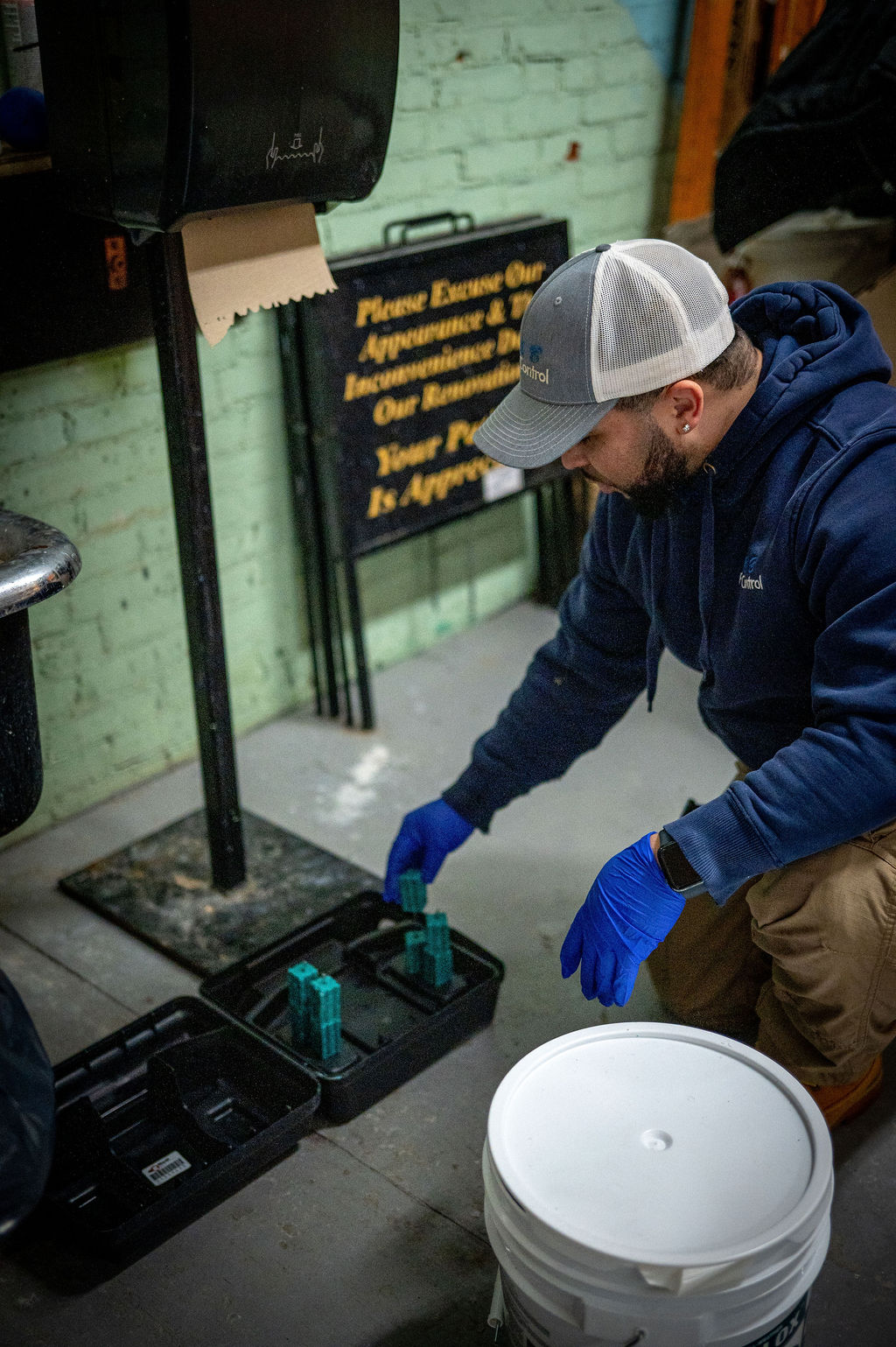
Snap traps placed along walls in the garage, basement, and attic serve as an early-warning system. If you catch a mouse in October, it tells you there’s an entry point still open somewhere. Inspect and re-seal immediately.
Rodent-repellent sachets containing peppermint oil or other botanical deterrents can be placed in enclosed spaces like drawer cabinets, pantries, and garage corners. The evidence for their standalone effectiveness is mixed, but as a supplement to sealed entry points, they add an additional layer of discouragement.
Outdoor lighting does little to deter rodents, but removing harborage near the home’s exterior does. Clear woodpiles, dense shrubs, and debris piles away from the foundation—these provide cover and nesting sites that draw rodents toward your walls.
What Are the Signs of a Mouse Infestation Indoors?
Catching an infestation early limits damage. Mice reproduce rapidly—a single female can produce five to ten litters per year, with four to eight pups per litter. A pair of mice that moves in during October can become a significant population by January.
Watch for these early indicators:
- Droppings: Small, dark pellets roughly the size of a grain of rice, typically found along walls and in cabinets
- Gnaw marks: Fresh gnawing appears light-colored; older marks are darker
- Nesting material: Shredded paper, insulation, or fabric collected in hidden corners
- Scratching sounds: Most active at night, particularly in walls and ceilings
- Grease marks: Darkened smudges along baseboards where mice travel repeatedly
If you find multiple signs simultaneously, the infestation may already be established. At that point, sealing entry points alone won’t resolve the problem—you’ll need to reduce the interior population through trapping or professional pest control before sealing becomes effective.
When Should You Call a Pest Control Professional?
DIY rodent-proofing is effective for prevention, but there are circumstances where professional intervention is the smarter call.
Consider contacting a licensed pest management professional if:
- You find evidence of an active infestation before you’ve had a chance to seal the home
- You’ve sealed the home and still see signs of new activity
- The property has significant structural damage that creates widespread entry opportunities
- You’re dealing with roof rat activity (more common in the South and coastal regions), which requires different trapping and exclusion strategies
A pest control professional can conduct a comprehensive exclusion inspection—identifying entry points you may have missed—and provide warranty-backed sealing services.
Your Fall Rodent-Proofing Timeline
To make implementation straightforward, here’s a suggested schedule for fall rodent prep:
|
Timeframe |
Task |
|---|---|
|
Early September |
Conduct full perimeter inspection; identify all gaps and cracks |
|
Mid-September |
Purchase materials (steel wool, hardware cloth, caulk, weather stripping) |
|
Late September |
Complete all sealing work on ground-level and basement entry points |
|
Early October |
Address roofline, vents, and utility penetrations |
|
Mid-October |
Place snap traps in garage, basement, and attic as monitoring tools |
|
November onward |
Check traps weekly; re-inspect after first freeze for new gaps |
Starting in September gives you the runway to complete the work before mouse pressure peaks in late October. Rushing the process in November—after mice are already looking for a way in—increases the chance that you’ll seal entry points with rodents already inside.
Protect Your Home Before the Season Turns
Rodent-proofing your home in fall is one of the highest-return maintenance tasks a homeowner can complete. The materials are affordable, the techniques are learnable, and the consequences of skipping it—damaged insulation, chewed wiring, contaminated food, and the cost of extermination—are real.
Start with a thorough inspection of your foundation, garage, utility penetrations, and roofline. Use steel wool, hardware cloth, and appropriate sealants to close every gap ¼ inch or larger. Layer in deterrents, eliminate exterior harborage, and set snap traps as an early-warning system.
The goal is simple: make your home a place mice cannot get into—before they start trying.
Frequently Asked Questions
What smells keep mice away from your home?
Peppermint oil, clove oil, and ammonia are commonly cited as rodent deterrents. Mice have a highly sensitive olfactory system, and strong scents can discourage them from entering treated areas. However, these are supplementary measures—they do not replace physical exclusion. Scent deterrents lose potency over time and must be refreshed regularly to maintain any effect.
How small a gap can a mouse fit through?
A mouse can squeeze through any gap approximately ¼ inch (6mm) in diameter—roughly the width of a standard pencil eraser. Young mice can fit through even smaller openings. Any visible gap or crack in your home’s exterior should be treated as a potential entry point.
Is it better to use poison or traps to control mice?
Snap traps are generally preferred over rodenticide bait for residential use. Poisoned mice often die inside wall cavities, causing odor problems and attracting secondary pests. Snap traps allow for confirmation of catch and immediate removal. For larger infestations, a licensed pest control professional can assess the most appropriate control method.
Can mice enter through the roof?
Yes. Roof rats—a species distinct from the common house mouse—are particularly adept at accessing homes via the roofline. Standard mice can also enter through gaps in soffits, fascia boards, and roof-wall intersections, particularly if tree branches provide access. Inspect and seal roofline gaps as part of a complete fall exclusion effort.
How do I know if mice are already inside before I seal my home?
Look for droppings (small, dark pellets along walls and in cabinets), fresh gnaw marks, nesting material made from shredded fabric or paper, and grease marks along baseboards. If you find active signs of infestation, address the interior population through trapping before completing your exterior sealing—otherwise, you risk sealing rodents inside.
Does homeowner’s insurance cover rodent damage?
Most standard homeowner’s insurance policies exclude rodent damage, classifying it as a preventable maintenance issue rather than a sudden or accidental loss. Damage from rodents—including chewed wiring, contaminated insulation, and structural repairs—is typically paid out of pocket. This makes prevention significantly more cost-effective than remediation.