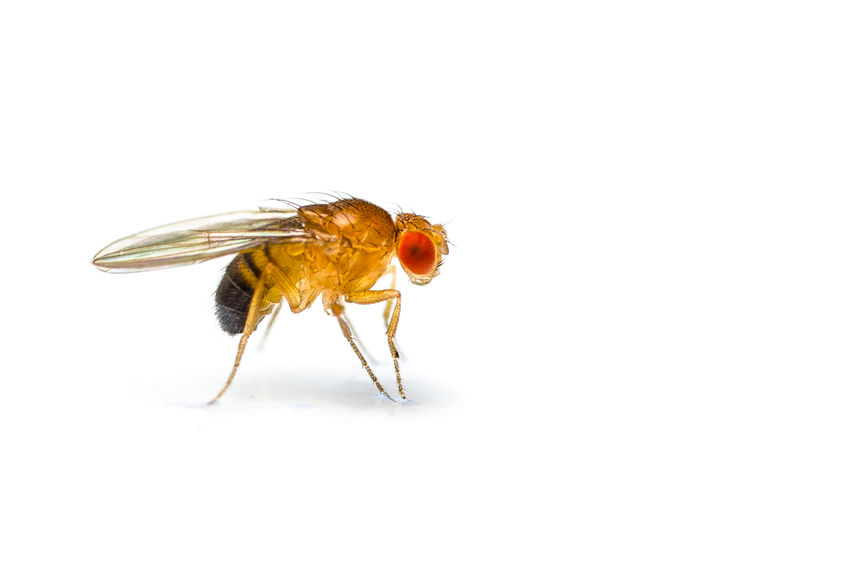
Along with ants and cockroaches, flies are the most commonly reported group of insect pests within and around homes in the northeast US. The most common fly pests include fruit flies, face flies, domestic house flies and cluster flies, the last of which invades homes in massive numbers during the fall season where they establish a lasting presence within inaccessible areas, including wall voids, tight attic spaces and beneath floorboards. With the exception of house flies, vinegar flies may be the most commonly encountered group of fly pests within homes, restaurants and urban buildings. Their commonality within homes is due, in large part, to the exceptionally small size of vinegar flies, as these airborne pests are tiny enough to fit through window screens. Vinegar flies are also able to reproduce more rapidly than most other fly pests, often resulting in advanced infestations that cannot be managed without the intervention of a pest control professional.
Many vinegar fly species have been documented as pests within homes, and they belong to the Drosophilidae family, which includes fruit flies. Vinegar flies congregate around a variety of fermented foods and liquids, particularly rotting fruits, vegetables, wine, beer, and of course, vinegar. Female vinegar flies deposit numerous eggs on the surface of decaying organic matter, making these flies a serious nuisance in homes where fermenting foods and liquids can be found. Their attraction to unclean residential garbage and recycle bins can also lead to both indoor and outdoor vinegar fly pest issues. All vinegar fly species are similar in size and appearance, as their exterior body color can vary from dull brownish-yellow to brownish-black. The most common vinegar fly pest species, D. melanogaster, is only around 3 mm in body length, and their pearl-like eggs can only be seen with a magnifying lense.
Vinegar flies can become problematic in seemingly clean homes, as vinegar flies often establish a significant presence beneath and behind kitchen appliances where discarded food can be found. These flies may also congregate within cracks and crevices in flooring where mop water leaves behind decaying organic material. Ridding homes of all sources of decaying matter may eliminate infestations, but a persistent vinegar fly presence can be addressed by pest control professionals.
Have you ever experienced vinegar fly pest issues either within or around your home?