DIY ant baits can eliminate small, surface-level ant problems, but they rarely reach the colony source. Professional pest control uses targeted treatments—colony-destroying baits, barrier applications, and expert identification—that address infestations at the root. For recurring or large-scale ant problems, professional treatment consistently outperforms store-bought solutions.
You’ve set out the bait traps. You’ve sprayed the baseboards. You’ve wiped every countertop clean. And yet, three days later, the ants are back—sometimes worse than before.
This is one of the most frustrating cycles homeowners face, and it usually comes down to one core misunderstanding: killing the ants you see is not the same as eliminating the colony producing them. A mature ant colony can contain anywhere from a few thousand to several million workers, depending on the species. The ones marching across your kitchen floor represent a small fraction of the total population.
This post breaks down how DIY ant baits and professional pest control treatments actually work, where each approach succeeds, and where each falls short. By the end, you’ll have a clear picture of which option makes sense for your specific situation—and why the answer isn’t always as straightforward as the packaging suggests.
How Do DIY Ant Baits Actually Work?
Store-bought ant baits operate on a simple principle: worker ants carry a slow-acting toxic substance back to the colony, where it’s shared with other workers and, ideally, the queen. If the queen dies, the colony collapses.
The logic is sound. The execution, however, is where most DIY attempts run into trouble.
The Active Ingredients in Common Ant Baits
Most consumer-grade ant baits use one of three active ingredients:
|
Active Ingredient |
How It Works |
Common Products |
|---|---|---|
|
Borax (Boric Acid) |
Disrupts ant digestive systems; slow-acting |
Terro, many store brands |
|
Fipronil |
Attacks the nervous system; transferred through contact |
Combat, Raid Ant Baits |
|
Hydramethylnon |
Interferes with energy production in cells |
Grants Kills Ants |
Borax-based baits, like those found in Terro products, are among the most widely used and have a reasonable track record for small infestations. The slow-kill mechanism is intentional—it gives workers enough time to bring the bait back to the colony before dying.
Why DIY Ant Baits Often Fail to Eliminate the Colony
The problem isn’t usually the bait formula. It’s placement, species mismatch, and competing food sources.
Placement errors are common. Many homeowners place bait directly on ant trails, which can actually deter foragers if the concentration is too high or the product scent is unfamiliar. Bait stations work best when placed near—but not on—active trails, allowing ants to find them naturally.
Species mismatch is a bigger issue. Different ant species have different dietary preferences. Carpenter ants are protein-heavy feeders, while pavement ants and odorous house ants tend to prefer sugary substances. A sugar-based bait placed for carpenter ants won’t attract them reliably. Without proper species identification, you’re essentially guessing.
Competing food sources undermine even a well-placed bait. If ants have access to crumbs, pet food, or moisture, they have little incentive to take your bait back to the colony in useful quantities.
What Does Professional Ant Treatment Actually Involve?
Professional pest control isn’t simply a stronger version of what you buy at the hardware store. The approach is structurally different from the start.
Step 1: Species Identification
Licensed pest control technicians identify the ant species before selecting any treatment. This matters more than most homeowners realize. Treating odorous house ants the same way as fire ants—or worse, carpenter ants—will produce poor results regardless of product quality.
Carpenter ants, for example, don’t eat wood; they excavate it to build galleries. Treating the visible trail does nothing to address the structural nesting site. A professional will locate the satellite colony or primary nest, often using moisture meters to find wood damage behind walls.
Step 2: Targeted Bait Application
Professional-grade baits contain higher concentrations of active ingredients and are matched to the feeding preferences of the target species. Technicians also know when not to use bait—in some cases, a contact insecticide applied correctly will outperform bait, particularly for immediate knockdown of aggressive species like fire ants.
Step 3: Barrier and Perimeter Treatments
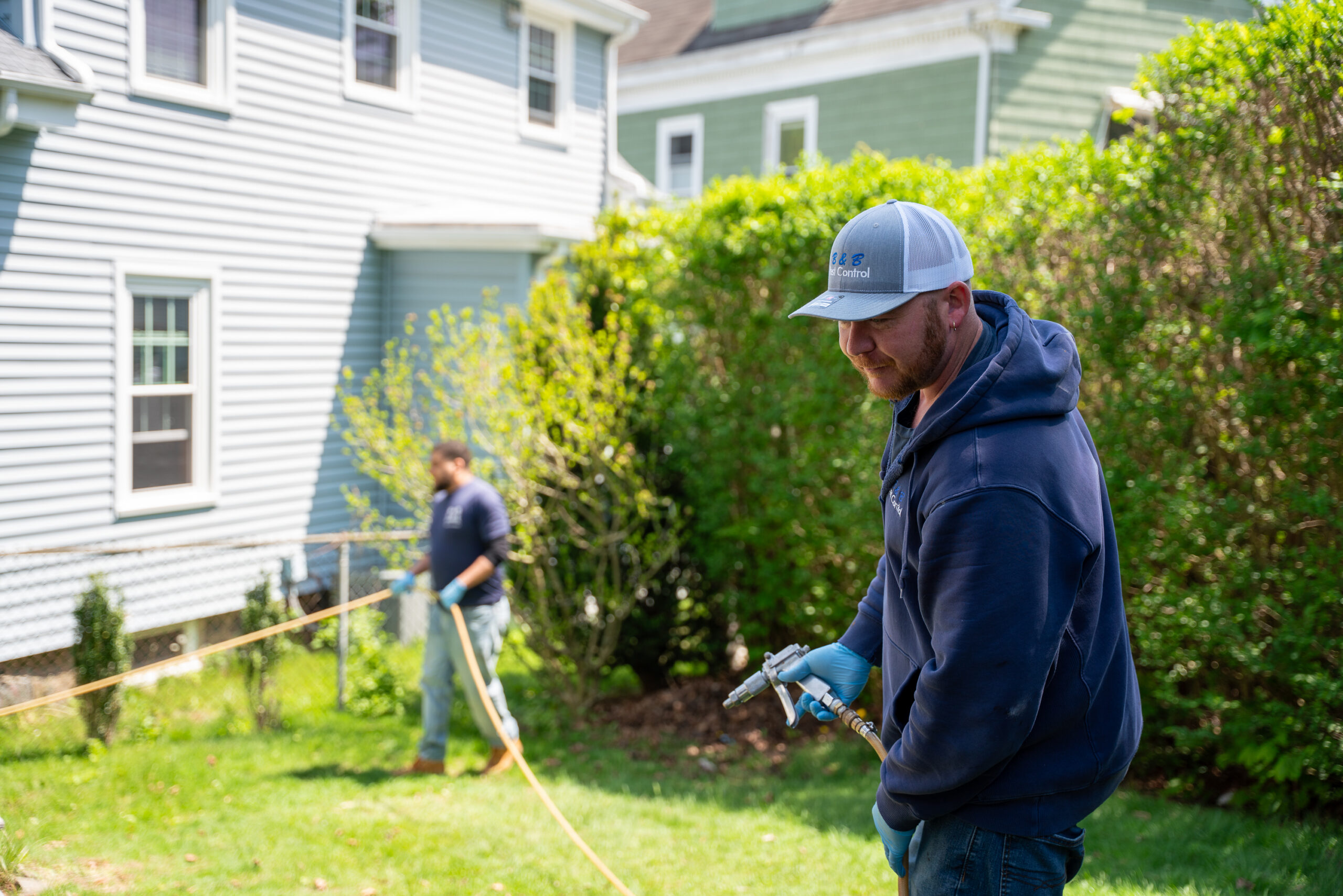
Most professional treatments include an exterior perimeter application—typically a non-repellent insecticide like Termidor (fipronil) or Taurus SC. Unlike repellent sprays, non-repellent formulas aren’t detected by ants. Workers cross through treated zones, carry the insecticide on their bodies, and pass it to nestmates through grooming and food sharing.
This transfer effect is what makes non-repellent barrier treatments so effective. According to research published by the University of Florida’s Entomology and Nematology Department, non-repellent insecticides applied to exterior perimeters can reduce ant activity by over 90% within two to four weeks.
Step 4: Follow-Up and Monitoring
Reputable pest control companies schedule follow-up inspections—typically 30 days after initial treatment—to assess colony elimination and apply supplemental treatments if needed. This monitoring step is something DIY treatments simply can’t replicate.
DIY vs. Professional Treatment: A Side-by-Side Comparison
|
Factor |
DIY Ant Bait |
Professional Treatment |
|---|---|---|
|
Average cost |
$10–$30 per product |
$150–$300+ per treatment |
|
Species identification |
Rarely included |
Always performed |
|
Colony elimination rate |
Low to moderate |
High, when performed correctly |
|
Time to results |
Days to weeks |
2–4 weeks for full colony elimination |
|
Risk of reinfestation |
High without addressing entry points |
Lower with perimeter treatment |
|
Best for |
Minor, surface-level infestations |
Recurring, large-scale, or structural infestations |
When Is DIY Ant Control Enough?
DIY solutions aren’t automatically inferior. For small, isolated ant problems—a handful of ants appearing seasonally near a window or door—a well-placed borax bait station can be highly effective. The key conditions where DIY tends to work:
- The infestation is new and limited to one area
- You’ve correctly identified the species (or can do so using online resources from university extension programs)
- There are no competing food sources nearby
- The ants are not nesting inside walls or structural wood
If you check those boxes, start with a slow-acting bait like Terro Liquid Ant Bait, placed near—not on—the trail, and avoid spraying any insecticides nearby, as this will deter foragers from taking the bait.
When Should You Call a Professional?
Professional pest control is worth the investment in several specific scenarios:
- Recurring infestations: If ants return within weeks of DIY treatment, the colony source hasn’t been addressed.
- Carpenter ants: Any evidence of carpenter ant activity—sawdust-like frass, hollow-sounding wood, large black ants near moisture-damaged areas—warrants a professional inspection for structural damage.
- Multiple species or entry points: Overlapping infestations from different ant species require separate treatment strategies.
- Large outdoor colonies: Fire ant mounds or sprawling pavement ant colonies in yards rarely respond to consumer products at the concentration needed for full control.
- Food service or healthcare environments: Regulatory and sanitation requirements in commercial settings make professional-grade treatments non-negotiable.
The Surface Treatment Problem: Why Most People Keep Fighting the Same Ants
Here’s the core issue with most DIY ant control strategies, and even some professional ones: surface treatments kill foragers, not colonies.
Repellent sprays—raid-style aerosols, essential oil barriers, diatomaceous earth lines—create temporary disruption at best. Ants simply reroute around treated areas. Colony populations remain intact, and forager numbers replenish within days. This explains why so many homeowners feel like they’re winning the battle but losing the war.
The only path to lasting control is delivering a lethal dose to the queen—or queens, since many ant species maintain multiple reproductive females across satellite colonies. That requires either slow-acting bait that workers carry deep into the nest, or a non-repellent insecticide that transfers through ant-to-ant contact over time.
Surface treatments don’t accomplish either of those goals.
What’s the Smartest Approach for Persistent Ant Problems?
For most homeowners dealing with a stubborn or recurring ant problem, a combined approach works best: start with professional treatment to eliminate the existing colony, then use targeted DIY maintenance (sealing entry points, removing food sources, periodic bait placement) to prevent reinfestation.
This isn’t a pitch for spending more money. Ant colonies left untreated don’t typically disappear on their own—and carpenter ants in particular can cause significant structural damage over time. A single professional treatment that actually eliminates the colony is more cost-effective than a year of store-bought products that don’t.
Frequently Asked Questions About Ant Bait and Professional Treatment
How long does it take for ant bait to kill a colony?
Slow-acting baits like borax-based products typically take 1–2 weeks to show meaningful colony reduction, and up to 6 weeks for full elimination. Faster-acting baits kill foragers before they can transfer the substance to nestmates, which defeats the purpose.
Can I use both DIY bait and spray at the same time?
No. Insecticide sprays near bait stations deter foragers and contaminate the bait. If you’re using bait, remove all competing sprays and avoid cleaning with strong-smelling products near bait placement areas.
How much does professional ant treatment cost?
A standard professional ant treatment in the United States typically costs between $150 and $300 for a one-time visit. Many pest control companies offer quarterly maintenance plans ranging from $400 to $700 annually, which often include free return visits for recurring problems.
What ant species are hardest to eliminate with DIY products?
Carpenter ants, fire ants, and odorous house ants with multi-queen colonies are among the most difficult to eliminate without professional-grade products and species-specific strategies. Carpenter ants in particular often require locating and treating a hidden nest site inside structural wood.
Does professional ant treatment work immediately?
Not usually. Non-repellent perimeter treatments typically take 2–4 weeks for full colony elimination as the active ingredient transfers through the colony population. Immediate knockdown sprays can reduce visible ant activity quickly but rarely address the colony source.
Are there natural alternatives that actually eliminate ant colonies?
Diatomaceous earth and essential oil sprays can deter ants from specific surfaces but don’t eliminate colonies. Borax-based DIY baits are the closest thing to a natural option with real colony-killing potential, and they work best when conditions are right: correct species, correct bait type, and no competing food sources.